

FLC - Research with Lepton Colliders

Welcome to the old pages of the former FLC group. Please see our new web page at ftx.desy.de
Our main subject of study is the physics of electron-positron collisions at high energies.
We are involved in the ILC project.
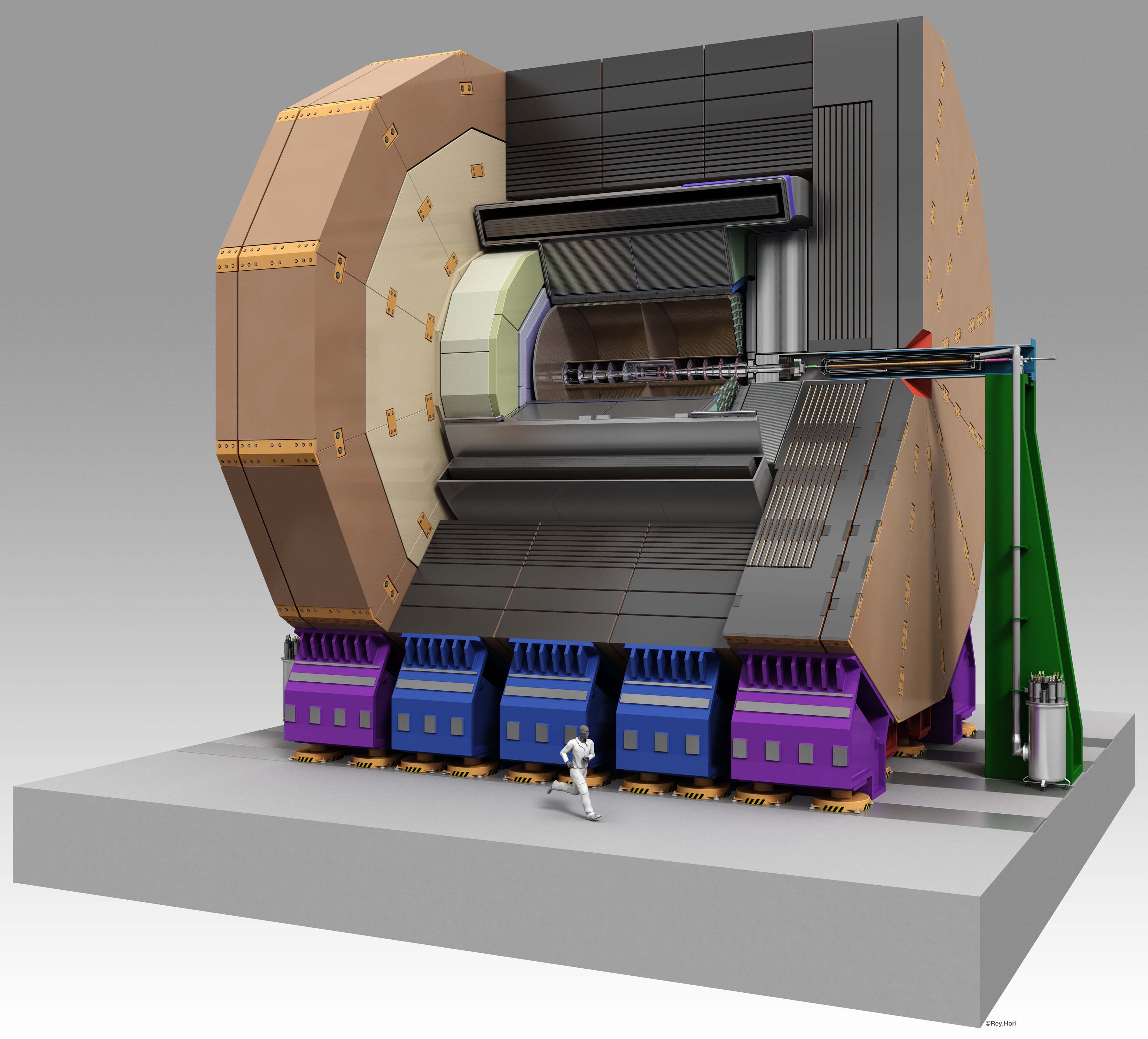
Research & Development for a linear collider detector
The International Linear Collider
ILC
is a planned electron-positron linear collider, which will operate at energies from 91 GeV up
to about 500 GeV range (with the possibility to upgrade to 1 TeV). This machine will allow us
to explore a new frontier of high energies in electron-positron collisions, complementary to what is
planned at the LHC at
CERN.
The main physics motivation for this machine is the detailed
investigation of the mechanism, by which the electroweak symmetry breaking is realised in nature.
The detailed investigations of the properties of the Higgs particle, the top quark and the electroweak gauge bosons and their
interactions play a central role.
The detector and the physics at the ILC machines are studied
by an international group, the Linear Collider Collaboration (LCC) which is chartered by ICFA.
In Europe
ECFA
has setup a study to investigate the physics potential of a 500 - 1000 GeV linear accelerator.
More generally understandable information on the ILC machine, physics and detector can be found at
Welt der Physik (only in german).
back to top